

Embark on a journey through the world of life insurance explained, where we unravel the complexities and shed light on the importance of this financial safeguard. Get ready to explore the different facets of life insurance in a way that is both informative and engaging.
Overview of Life Insurance
Life insurance is a financial product that provides a lump-sum payment to beneficiaries upon the death of the insured individual. The primary purpose of life insurance is to provide financial protection and security for loved ones in the event of the policyholder’s passing.
Types of Life Insurance Policies
- Term Life Insurance: Provides coverage for a specified period, such as 10, 20, or 30 years. It offers a death benefit if the insured passes away during the term.
- Whole Life Insurance: Offers coverage for the entire life of the insured and includes a cash value component that grows over time.
- Universal Life Insurance: Combines a death benefit with a savings component that earns interest based on current market rates.
Benefits of Life Insurance
- Income Replacement: Life insurance can replace lost income for beneficiaries, ensuring financial stability.
- Debt Repayment: The death benefit can be used to pay off outstanding debts, such as mortgages or loans.
- Estate Planning: Life insurance can help with estate taxes and provide an inheritance for loved ones.
Key Components of Life Insurance
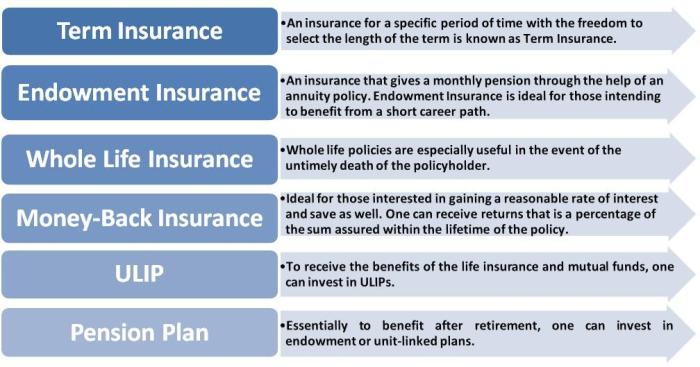
Life insurance policies consist of several key components that are essential to understand in order to make informed decisions regarding coverage. One of the fundamental aspects of life insurance is the premiums, which play a crucial role in determining the cost and coverage of the policy.
Role of Premiums in Life Insurance
Premiums are regular payments made by the policyholder to the insurance company in exchange for coverage. The amount of the premium is determined based on various factors, such as the policyholder’s age, health, lifestyle, and the amount of coverage desired.
Generally, younger and healthier individuals pay lower premiums compared to older or less healthy individuals. It is important to pay premiums on time to keep the policy active and ensure that the coverage remains in place.
Determination of Beneficiaries
Beneficiaries are the individuals or entities designated by the policyholder to receive the death benefit in the event of the policyholder’s passing. Beneficiaries can be family members, friends, charities, or even trusts. It is essential to keep the beneficiary designation up to date to reflect any changes in circumstances, such as marriage, divorce, or the birth of children.
In the absence of a designated beneficiary, the death benefit may be paid to the policyholder’s estate.
Types of Life Insurance Policies

Life insurance policies come in various forms, each offering unique features and benefits tailored to different needs and preferences. Let’s compare term life insurance, whole life insurance, and universal life insurance to understand their differences and advantages.
Term Life Insurance vs. Whole Life Insurance
Term life insurance provides coverage for a specific period, typically 10, 20, or 30 years. It offers a death benefit to beneficiaries if the insured passes away during the policy term. On the other hand, whole life insurance provides coverage for the entire lifetime of the insured and includes a cash value component that grows over time.
While term life insurance is more affordable and straightforward, whole life insurance offers lifelong protection and a savings element.
Universal Life Insurance Features and Benefits
Universal life insurance is a flexible type of permanent life insurance that combines a death benefit with a cash value component. Policyholders can adjust their premiums and death benefits, making it customizable to their changing financial circumstances. The cash value earns interest at a variable rate, allowing for potential growth over time.
Moreover, universal life insurance offers tax-deferred savings and the option to borrow against the cash value.
Differences Between Term, Whole, and Universal Life Insurance
Term life insurance
Provides coverage for a specific term, typically more affordable, and does not accrue cash value.
Whole life insurance
Offers lifelong coverage, includes a cash value component, and premiums remain fixed.
Universal life insurance
Combines a death benefit with a cash value component, offers flexibility in premiums and death benefits, and has the potential for cash value growth.Each type of life insurance policy caters to different financial goals and preferences, so it’s essential to consider your needs and long-term objectives when selecting the right policy for you.
Factors to Consider When Choosing Life Insurance
When selecting a life insurance policy, there are several important factors to consider that can have a significant impact on your coverage and premiums. Factors such as age, health, coverage amount, and term length play a crucial role in determining the right life insurance policy for your needs.
Age and Health Impact on Premiums
Age and health are key factors that can impact life insurance premiums. Younger individuals typically pay lower premiums as they are considered to be at lower risk of health issues. On the other hand, older individuals or those with pre-existing health conditions may face higher premiums due to the increased risk to the insurance company.
Significance of Coverage Amount and Term Length
The coverage amount and term length of a life insurance policy are important considerations. The coverage amount should be sufficient to provide financial support to your beneficiaries in the event of your passing. Additionally, the term length should align with your financial obligations and goals, such as paying off a mortgage or providing for children’s education.
Process of Applying for Life Insurance
When applying for a life insurance policy, there are several steps involved in the process to ensure that you obtain the coverage you need to protect your loved ones financially in the event of your passing.
Typical Requirements for Obtaining Life Insurance Coverage
- Fill out an application: You will need to provide personal information such as your age, health history, occupation, and lifestyle habits.
- Undergo a medical exam: Most life insurance companies require applicants to undergo a medical exam to assess their current health status.
- Provide medical records: You may be asked to provide medical records or reports from your healthcare providers to support your application.
- Choose a coverage amount: You will need to decide on the amount of coverage you want and the length of the policy.
- Premium payment: You will need to pay the premium for the policy to be in effect.
Importance of Undergoing a Medical Exam When Applying for Life Insurance
Undergoing a medical exam is crucial when applying for life insurance as it helps the insurance company assess your current health status and determine the level of risk associated with insuring you. The results of the exam will influence the premium you pay and the coverage amount you are eligible for.
By providing accurate and up-to-date health information during the application process, you can ensure that you receive the most appropriate coverage for your needs.
End of Discussion
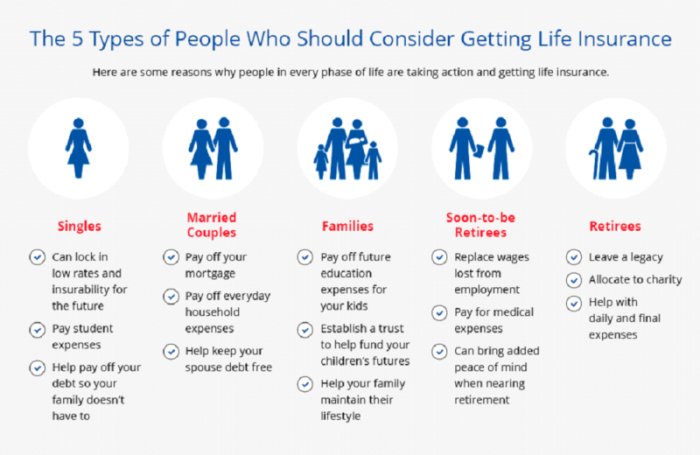
As we conclude our exploration of life insurance explained, we hope you now have a clearer understanding of its significance and how it can benefit you and your loved ones. Remember, being informed is the first step towards making sound financial decisions for the future.
Helpful Answers
What factors determine life insurance premiums?
Life insurance premiums are determined based on factors such as age, health condition, lifestyle habits, and the coverage amount desired.
Can I change my life insurance policy after purchasing it?
Yes, you can typically make changes to your life insurance policy, such as increasing or decreasing coverage, adding riders, or even switching to a different type of policy.
Is life insurance necessary for young individuals?
While life insurance is often associated with older individuals, having coverage at a younger age can offer financial protection and peace of mind, especially if you have dependents.